![Lakewood [Provisional] Post](https://lwppost.com/wp-content/themes/lpp/assets/img/masthead.svg?v=1789331641)
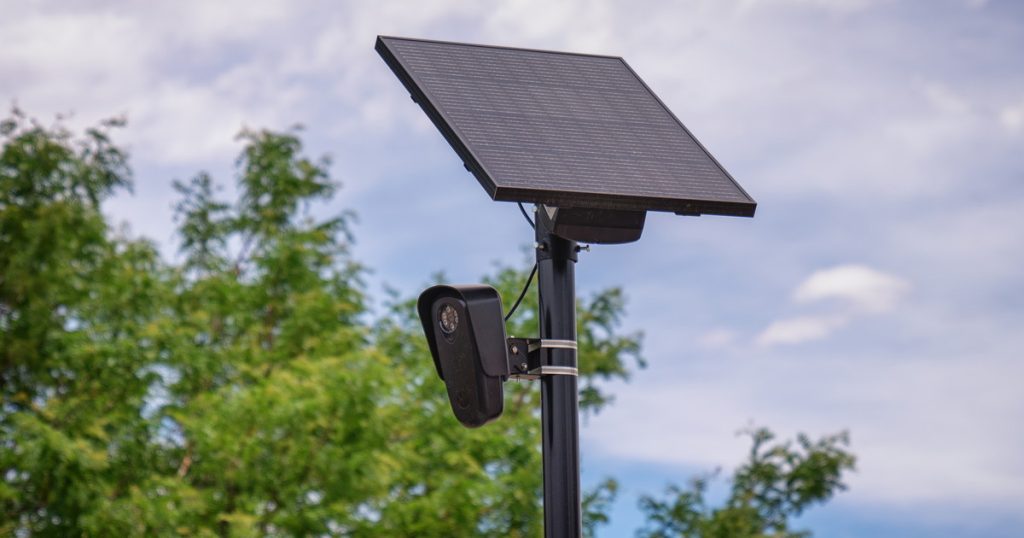
Lakewood City Council voted on September 8 to send the city’s contract with Flock Safety, which runs 50 automated license plate readers, to its Public Safety Committee.
Council President Sarah Kepple, Vice President Kyle Baker and Councilmember-at-Large Angelina Hamilton Steiner had asked for it to go to committee in a letter to the rest of council, so that residents could hear from the administration directly.
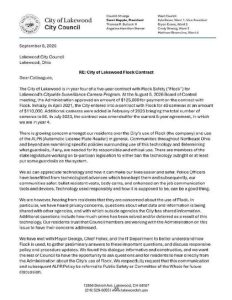 Read the letter · PDF, 2 pagesHamilton Steiner, Kepple and Baker to Lakewood City Council, September 8, 2026
Four residents spoke against the cameras during public comment, and two others had submitted written comments. Kepple told the room there is “no vote currently before council to extend or cancel the contract.” The committee next meets on October 12.
No minutes have been published for the meeting. The Lakewood Provisional Post watched the recording in full.
The letter dates the cameras to April 2021, when Lakewood signed a contract for 40 of them at $110,000. Ten more were added in February 2023, and the contract was rewritten that July into the five-year agreement now in its fourth year.
The administration approved this year’s payment of $125,000 at the August 5 Board of Control meeting.
Kepple, Baker and Hamilton Steiner wrote that residents have asked what data is shared, which outside agencies have received it, and how much crime the cameras have solved or deterred. They said they had met with Mayor George, Police Chief Kevin Fischer and the city’s IT department.
SOURCE · portal.laserfiche.com · Checked September 13The September 8 council packet: the request, the contract history and the camera policyThe council packet also includes the police department’s policy on the cameras. Flock arranges all installation and maintenance of the equipment. The policy calls the data “the sole responsibility of the company.”
It says officers do not need reasonable suspicion or probable cause to use the system, and that data “may be released to other authorized and verified law enforcement officials and agencies at any time for legitimate law enforcement purposes.” Images are deleted after 30 days unless an officer downloads them into a case file.
The policy also says plate data is not to be shared for immigration enforcement or reproductive rights enforcement “without prior approval from the Chief of Police.”
Cleveland council voted 9–6 in July to renew its own contract with Flock for six months rather than a year, and to bar the Northeast Ohio Regional Fusion Center from open access to the city’s camera data, Cleveland 19 reported.
ENDFOR NOW